This is a researched guide, based on published product information and practical planning. It is not a hands-on product test. Check the exact model and its current instructions before buying.
Find the unused height
Choose one cabinet section and remove its contents. Measure the height from the supporting shelf to the shelf above, then compare it with the items you plan to keep there. A tall stack that nearly fills the opening leaves little room for another level.
If your cabinet shelves are adjustable, first consider moving a shelf. A riser is most useful when the existing spacing cannot easily change or when only part of the shelf needs a second level.
Plan the lower opening and the upper space
The space beneath a riser is smaller than its overall height because the top and frame take up room. Check the manufacturer’s interior clearance when available. If only outside dimensions are provided, do not treat them as guaranteed room for your tallest mug.
For the upper level, subtract the riser’s overall height from the cabinet opening. Then allow room to lift and tilt items out. A plate stack that technically fits may still require you to pull everything forward before taking the bottom plate.
Match the depth to the job
A shallow riser can keep a back row visible while preserving open space in front. A deeper riser can cover more of a shelf but may make the lower rear section harder to reach. Use dishes you already own to model the arrangement.
As a concrete size example, IKEA’s shallow VARIERA shelf insert is listed at 12 5/8 inches wide, 5 1/8 inches deep, and 6 1/4 inches high. Those are its outside dimensions; verify the particular size variant before comparing it with your cabinet.
Give the frame a stable place to stand
Check that every foot will rest on the shelf surface. Avoid placing a leg partly on a shelf edge, uneven liner, or another loose object. Keep dishes within the support area and follow the product’s loading instructions.
Do not improvise a tall stack of unrelated risers. Some systems specify a connection method: IKEA describes joining compatible VARIERA inserts with the included screws. That does not mean any two freestanding inserts are designed to be stacked together.
Organize by the motion you want to avoid
If pulling a bowl out of a mixed stack is the problem, separate bowls and plates. If short cups disappear behind tall mugs, try a shallow rear level. Give frequently used pieces the route that requires the fewest items to move.
Before buying more risers, live with one planned section for several days. Notice whether the extra shelf reduces rearranging or merely hides another row. Keep enough open space to wipe the cabinet and remove the insert. The cited VARIERA model’s care guidance is a damp-cloth wipe, so check your chosen finish before using stronger cleaning methods.
Compare a researched example
Use the guide to check your space, then compare the exact product's measurements and limitations.
A quick visual checklist
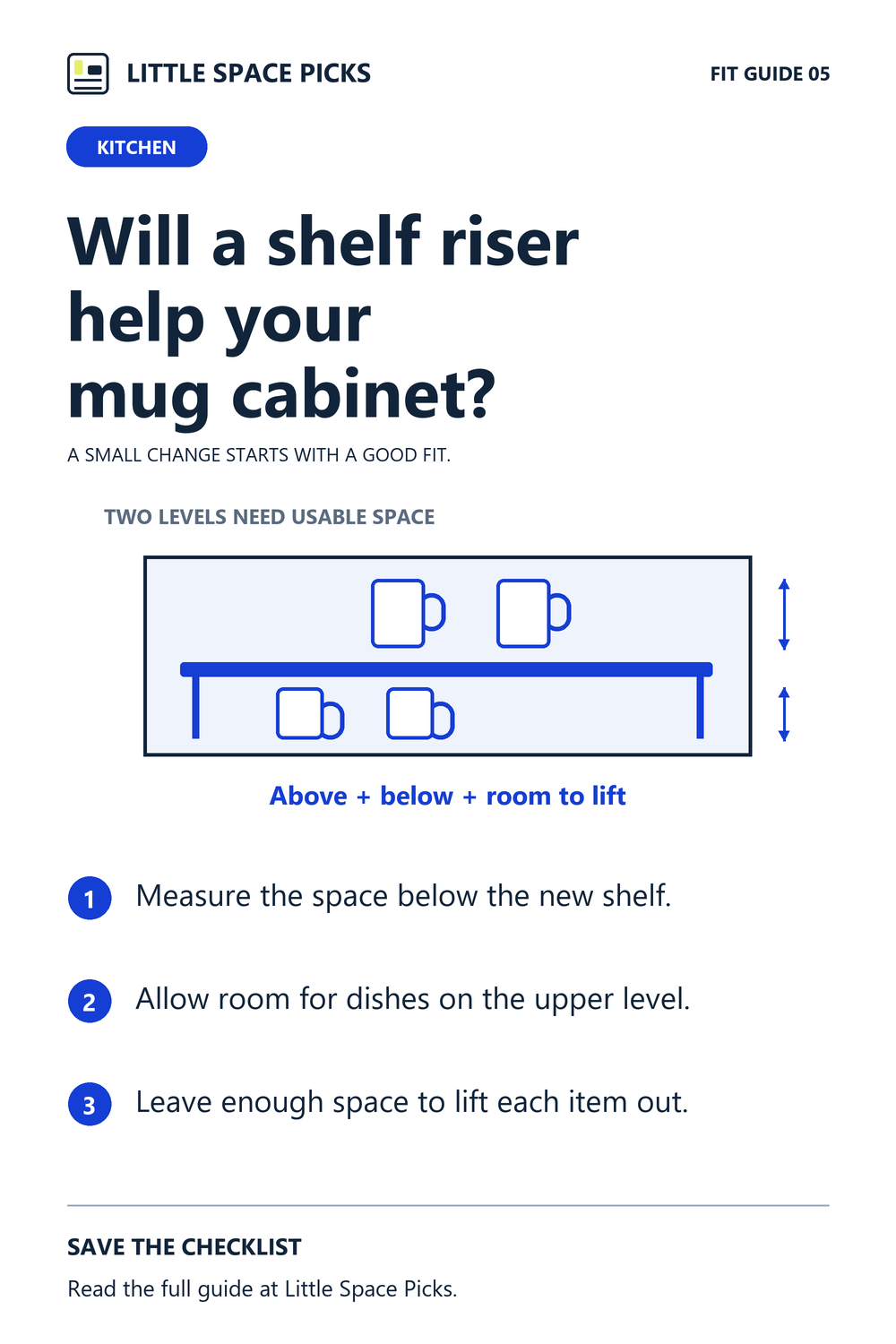
An original Little Space Picks planning diagram. Download the checklist.
Sources & further details
Sources checked October 4, 2026. Model details and installation guidance can change.