This is a researched guide, based on published product information and practical planning. It is not a hands-on product test. Check the exact model and its current instructions before buying.
The tray linked above is the expandable model
Our shopping link is for the gray Joseph Joseph DrawerStore expandable tray (SKU 85042): 29–48 cm wide, 38 cm deep and 5.3 cm high before utensils. It adjusts sideways. It is different from the compact tiered DrawerStore example discussed below; do not apply one model’s dimensions or drawer-height requirement to the other.
Measure the inside, including closing clearance
Measure the flat interior base from side to side and front to back. Check whether the walls slope inward or whether a rear fitting reduces usable space. The label on the cabinet is not a substitute for these measurements.
Next, check the space above the drawer as it closes. An organizer may sit below the drawer sides while spoon handles extend high enough to catch the frame. Measure the loaded arrangement, not only the plastic tray.
Sort by shape before counting compartments
Lay out the utensils you actually use. Group similar lengths and notice wide heads, thick handles, and awkward pieces such as a potato masher. Flatware usually benefits from narrow channels; cooking tools may need one broad compartment instead of several small ones.
Put occasional tools elsewhere if they prevent daily utensils from lying comfortably. This is a useful point to remove duplicates you do not want. Choosing a tray around every forgotten gadget can leave too little space for the things used at every meal.
Understand the height tradeoff in tiered trays
Tiered cutlery organizers overlap handles to reduce the width devoted to flatware. Their usefulness depends on the available height. For example, Joseph Joseph specifies a minimum drawer height of 3.5 inches for its Large Tiered Cutlery Organizer, even though the product’s stated height is lower.
Treat that minimum as a model-specific requirement. Do not assume another tray needs the same clearance or that a lower exterior measurement means it will work. Compare your drawer with the exact product’s usage instructions.
Choose one tray or a few modules
A single tray gives you a fixed arrangement and fewer separate pieces to reposition. Modular bins let you leave a larger open lane for unusually shaped tools. An expandable tray can bridge some widths, but its closed dimensions must still fit the drawer.
Try a paper layout before ordering a multi-piece set. Draw the outside sizes of the proposed bins and place real utensils inside those outlines. Include the space taken by bin walls; three nominally small bins may use more width than one divided tray.
Test the everyday routine
Imagine unloading a full set of clean flatware. Can each category go straight into its compartment? Can you remove a spoon without lifting the entire stack? Keep the categories that are easiest to confuse beside clear visual markers or simple labels.
Plan for crumbs and drips as well. A removable organizer is easier to access for cleaning. The cited Joseph Joseph tray requires hand washing and drying, so dishwasher compatibility should never be assumed. Once fitted, close the drawer gently several times with the normal contents in place.
Compare a researched example
Use the guide to check your space, then compare the exact product's measurements and limitations.
Our linked product picks include paid Amazon links. We may earn a commission if you buy through those links.
A quick visual checklist
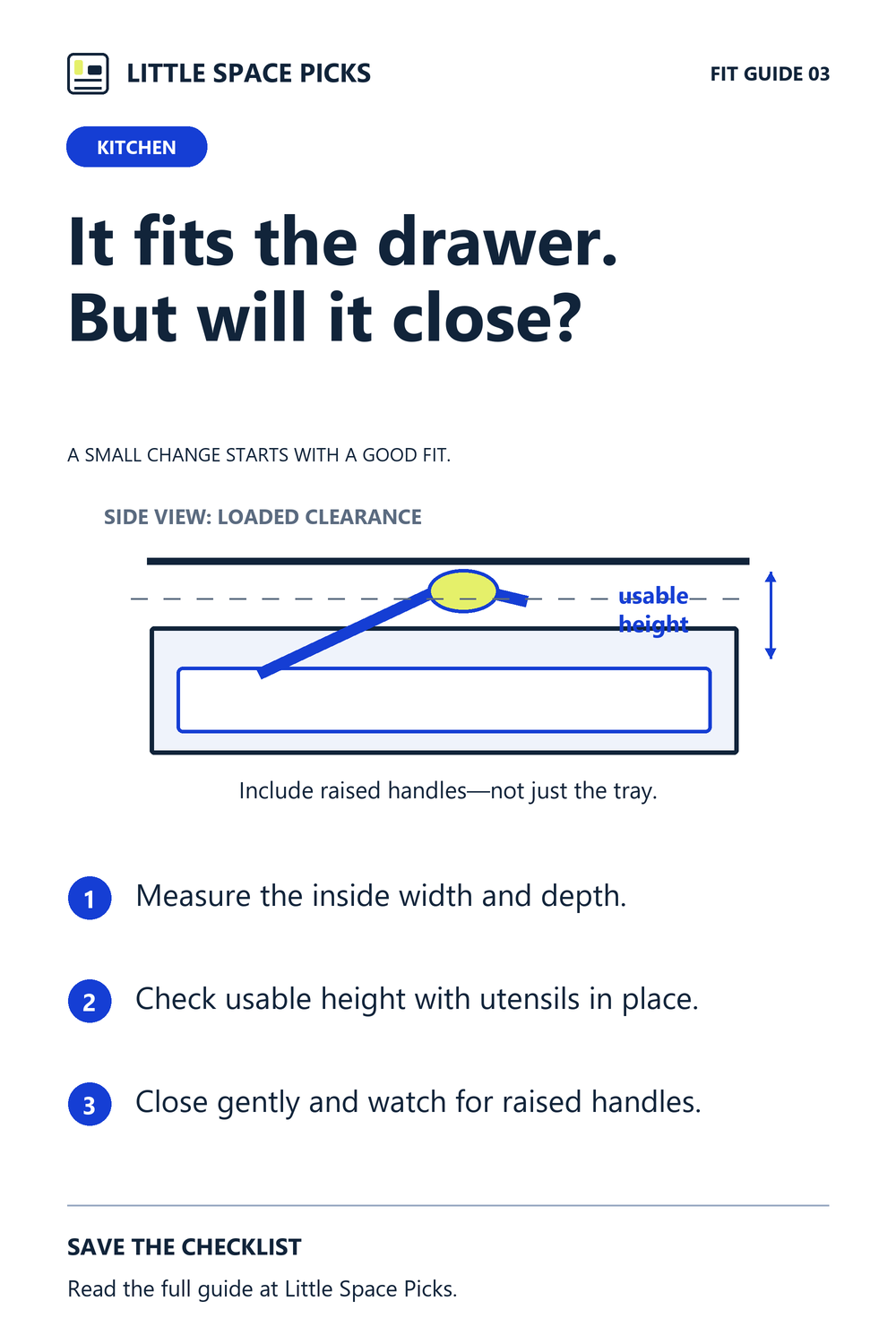
An original Little Space Picks planning diagram. Download the checklist.
Sources & further details
- Joseph Joseph DrawerStore Large Tiered Cutlery Organizer — minimum drawer height and care
- Joseph Joseph DrawerStore expandable gray tray — SKU 85042
Sources checked October 5, 2026. Model details and installation guidance can change.