This is a researched guide, based on published product information and practical planning. It is not a hands-on product test. Check the exact model and its current instructions before buying.
Gather the whole collection before judging it
Bring together clean containers and lids from cabinets, drawers, drying areas, and lunch bags. Note any pieces still in use in the refrigerator or dishwasher. A lid that looks unmatched today may belong to a container that has not returned to the cabinet.
Sort the collection by brand and product line, then by shape. Keep suspiciously similar lids in separate piles until you have identified them. Round, clear, or blue describes appearance; it does not establish compatibility.
Use a model match before a visual match
Look for product names, model numbers, or capacity markings on the pieces and compare them with the manufacturer’s current information. A capacity describes how much a container holds; it does not by itself identify the rim shape, latch position, or lid design.
For a concrete example, Pyrex identifies its Simply Store 4-cup round container as model 7201 and lists replacement lid model 7201PC. Its replacement-lid page also names the compatible containers. That is more useful purchasing evidence than a generic listing for a 4-cup lid.
Make compatibility groups small enough to trust
Create a group only after verifying which lids belong with which bases. Some systems share lids across containers of different depths or materials, but follow the manufacturer’s stated scope rather than assuming every item under the same brand is interchangeable.
Record the useful identifier on a shelf label or a small card beside the group: for example, the product line plus a model number. Keep the label on the storage area rather than adding marks to food-contact surfaces. If a piece is unidentified, set it aside while you check the manufacturer instead of mixing it into a confirmed group.
Choose paired storage or nested storage
Keeping each lid with its matching base can make sense for a few containers that you grab as complete sets. It uses more room than nesting, but it removes a pairing step. Check the care directions and put components away appropriately after cleaning.
For a larger compatible collection, nested bases and a nearby lid compartment may use the space more conveniently. Keep each base group beside its matching lids. Avoid one combined stack that alternates between different product lines and forces you to dismantle it for a single container.
Size a lid organizer from the loaded group
Measure your largest lid with its tabs or latches included. For upright storage, check the height of the lid plus the organizer base, along with the tilt needed to remove it. Compare the narrowest internal slot with the thickest lid edge.
Adjustable dividers are worth considering when groups have different widths or the collection changes. A simple bin may suit several flat lids of one type. Fixed slots make sense only if they fit your actual pieces. Count usable compartments rather than assuming a rack’s advertised lid capacity applies to every shape.
Buy replacements before replacing the system
If you have useful bases with missing lids, check for the exact manufacturer replacement first. Compare the total delivered cost and availability with the options you are considering. A replacement is useful only if its compatibility is confirmed; color and approximate diameter are not enough.
If you replace containers gradually, choose a family with useful sizes and suitable care requirements. Keep the existing collection organized during the transition. A new mixed-size set can create another storage problem if several pieces go unused.
Give returning pieces a clear place
Leave enough room in each group for the containers currently in use to return. A cabinet can appear spacious on meal-prep day and become overcrowded after everything is washed. Test the layout with the full collection before ordering another divider.
Keep a short missing-parts note until you have checked all the usual locations. When a lid or base is permanently retired, update its group so an orphaned piece does not keep reappearing in the daily search. The system should make mismatches visible rather than hide them in a deeper bin.
A quick visual checklist
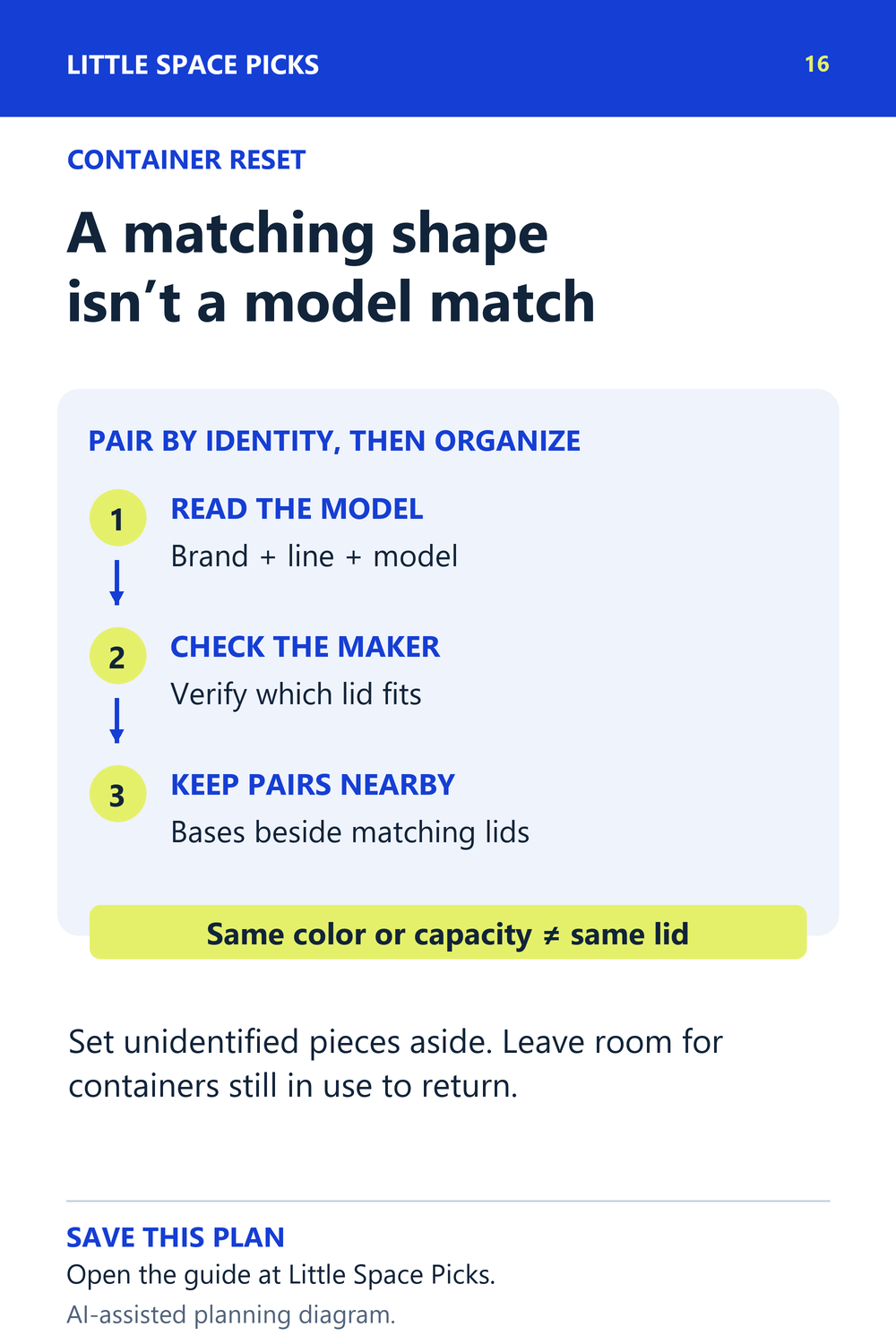
An original Little Space Picks planning diagram. Download the checklist.
Sources & further details
- Pyrex Simply Store 4-cup container — model 7201 and replacement lid 7201PC
- Pyrex Orange Lid for 4-cup Glass Food Storage Container — compatible models
Sources checked October 4, 2026. Model details and installation guidance can change.