This is a researched guide, based on published product information and practical planning. It is not a hands-on product test. Check the exact model and its current instructions before buying.
Sort active boxes from unopened replacements
Collect foil, parchment, plastic wrap, and food-storage bags. Keep one active box of each regularly used type near the work surface. Store unopened replacements separately so they do not occupy the easiest slots. Keep the product directions visible, especially when similar boxes contain materials intended for different uses.
Check whether the dispenser still works. A torn box that collapses when lifted may need a different storage position. Do not transfer every roll into a new dispenser just to make the collection match; first confirm that the replacement accommodates that exact roll and its intended cutting method.
Compare upright storage with a horizontal drawer
Standing boxes on end can use a narrow, tall pocket, provided the holder supports them and you can grip each box. A shallow drawer is useful when the boxes fit lengthwise and sit in a single layer. Lay the printed identification toward you in either arrangement.
In a hypothetical cabinet, a 14¼-inch box standing on a half-inch-thick organizer base reaches 14¾ inches. A 15-inch opening leaves only a quarter inch above it. That small difference does not establish usable access: try the actual lifting and tilting movement before choosing a tall-sided holder.
Match the holder to the way the box comes out
A tall holder may require lifting the entire box above its front wall. A lower front can make gripping easier, while a removable bin lets you bring the group forward before selecting a box. Check that neighboring boxes remain upright when one slot is empty.
For a drawer, allow the end flap to stay closed without crushing it against the back. Retrieve the box before dispensing unless both the holder and dispenser are designed for use in place. Keep exposed cutting edges away from the area where your fingers reach.
Treat an under-shelf model as a separate fit decision
An under-shelf organizer uses space above the items already on a shelf, but its brackets, basket, and loaded boxes all need clearance. Check shelf thickness, front trim, door hardware, and the height remaining below. A nominal cabinet width is only the first measurement.
Joseph Joseph specifies its large CupboardStore Film, Foil & Bag Organizer for units over 13 inches wide and shelves no thicker than ¾ inch. Its adhesive installation includes surface preparation and a 24-hour wait before use. Follow the complete instructions and confirm permission for attachment; adhesive mounting does not establish damage-free removal.
Keep one position empty during the trial
Use a temporary arrangement for several cooking sessions. Leave enough space to return a box without forcing it between its neighbors. If larger replacement boxes are sometimes purchased, measure those too before committing to fixed compartments.
Skip the organizer if the active boxes already fit in an accessible single layer, or if upright storage would require moving a shelf that your dishes need. A simple divider may be sufficient. Buy only when the proposed holder solves a specific problem such as collapsing boxes or a repeatedly disturbed stack.
A quick visual checklist
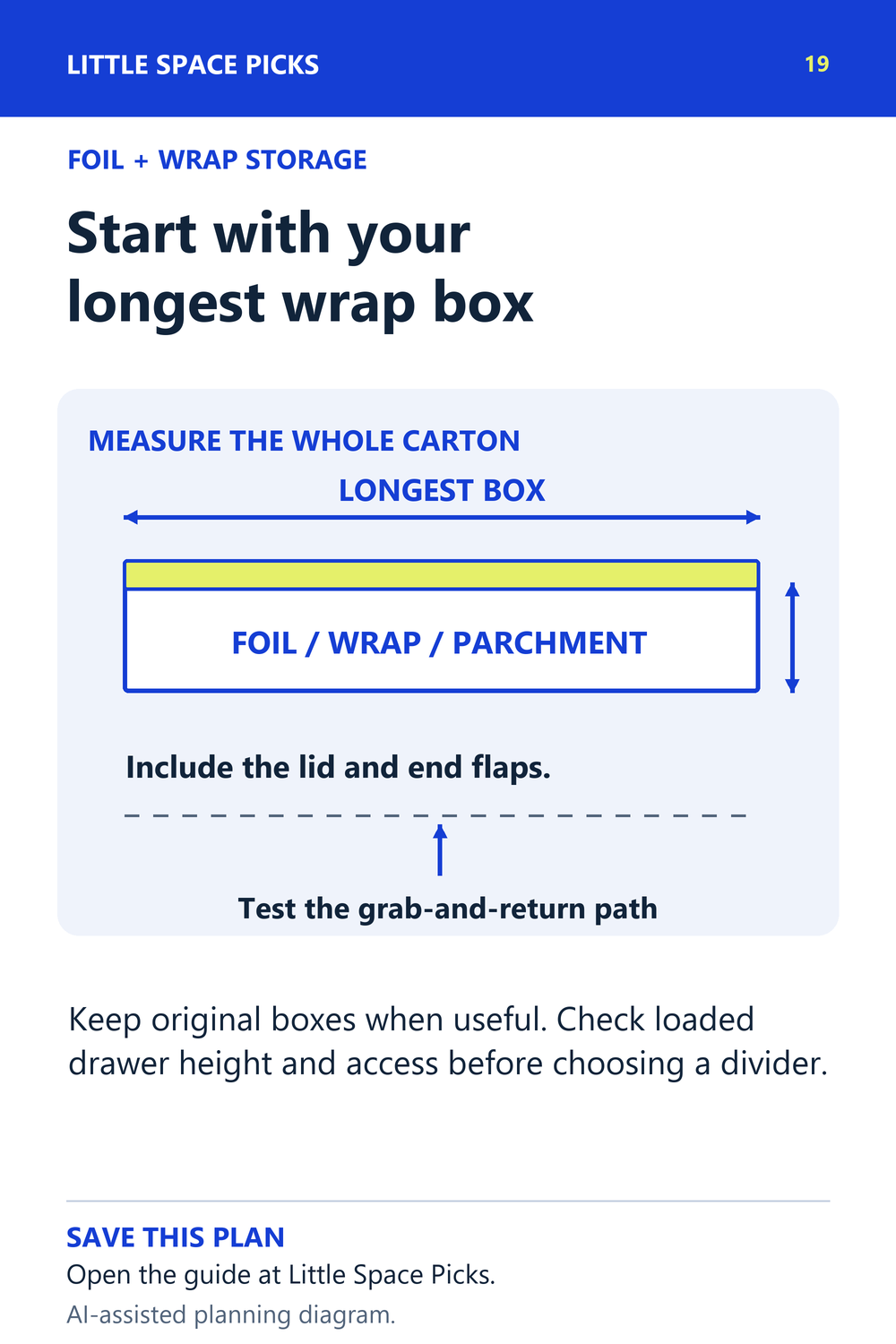
An original Little Space Picks planning diagram. Download the checklist.
Sources & further details
Sources checked October 5, 2026. Model details and installation guidance can change.