This is a researched guide, based on published product information and practical planning. It is not a hands-on product test. Check the exact model and its current instructions before buying.
Record the space at its tightest point
Measure the inside width, depth, and height of the actual storage location. Check more than one point if walls taper or a baseboard projects. Mark hinges, pipes, handles, drawer rails, and shelf lips on a rough sketch.
For cabinets, measure the entrance as well as the interior. For a floor cart, include the gap near the wheels and near the top. Write the units beside every number so that inches and centimeters do not get mixed during comparison.
Separate product size from package size
Listings may show assembled dimensions, collapsed dimensions, shipping measurements, and several product variants. Label which set you are recording. A box that arrives flat cannot tell you how much room the assembled frame will occupy.
Check whether projecting handles, wheels, feet, and lids are included. With adjustable products, record the minimum, maximum, and intended working size. A layout planned around a rack’s smallest dimension can fail once the dividers are spaced around your belongings.
Measure what goes inside
Choose the tallest, widest, and most awkward items, not just a typical one. Include spray triggers, pump heads, pot-lid handles, and the rim of a storage container. Compare them with the organizer’s usable opening, which may be smaller than its exterior.
Manufacturer instructions sometimes reveal a hidden requirement. Joseph Joseph’s cited tiered cutlery organizer specifies a minimum drawer height greater than the organizer’s own height. IKEA separately lists the overall dimensions of its VARIERA riser; those measurements should not be mistaken for the clear space beneath its top.
Add the movement envelope
Ask what must happen to retrieve an item. A drawer slides, a lid swings or lifts, a basket tilts, a turntable rotates, and a tall bottle rises before moving forward. Record the space for that motion as well as the parked footprint.
Rehearse with paper, cardboard, or an existing box. Open the door and move the mock-up through the route. Check that you can grip handles and reach mounting hardware. These simple trials are especially useful where two doors or drawers open into the same narrow area.
Turn the measurements into a buying note
Save one short note for the location: available opening, obstructions, largest item, required motion, and installation limits. Add a photo with the tape measure visible if that helps you remember which edge you measured.
Reject products that lack a measurement essential to your layout until you can obtain it. Compare care instructions, load limits, and assembly requirements alongside fit. Start with the piece that solves the most inconvenient daily problem, then see how the arrangement works before buying a matching set for the whole room.
A quick visual checklist
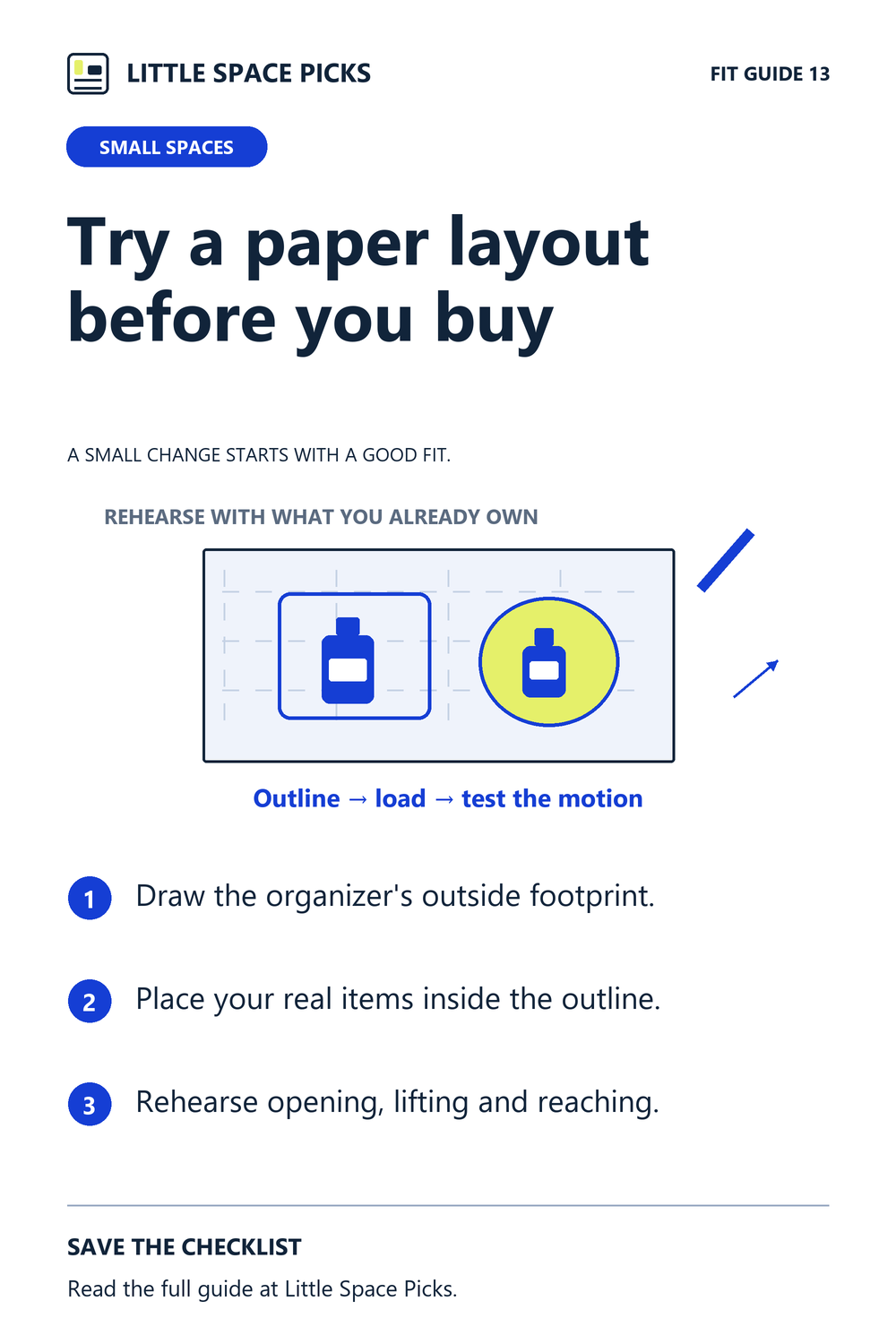
An original Little Space Picks planning diagram. Download the checklist.
Sources & further details
- Joseph Joseph DrawerStore Large Tiered Cutlery Organizer — minimum drawer height and care
- IKEA VARIERA shelf insert — dimensions and approved connection method
Sources checked October 4, 2026. Model details and installation guidance can change.