This is a researched guide, based on published product information and practical planning. It is not a hands-on product test. Check the exact model and its current instructions before buying.
Build a daily group before arranging the whole collection
Gather the spices you keep in different cupboards and group duplicates together. Identify the jars used during ordinary cooking, then separate occasional baking spices and unopened replacements. Keep the original labels and storage directions available. A front row should help you choose a jar, not become a second home for every spare.
Try a simple order: regular cooking jars together, baking jars together, and refills in one labeled location. Alphabetical order can work for a large collection, but it is not required. Choose an arrangement another person in the kitchen can understand without memorizing a complicated color system.
Check the closed drawer with the tallest jar included
Measure the drawer's clear width and depth, then its usable height along the closing path. The drawer front may be taller than the space under the cabinet rail. For upright jars, measure through the lid; for an angled insert, ask for or mock up the loaded height rather than adding the insert's empty height to every bottle.
In a hypothetical upright layout, a jar 4¼ inches tall standing on a half-inch tray base reaches 4¾ inches. It will not fit through a 4½-inch closing clearance. A lower tray or different orientation may change the result, but check that arrangement with the real jar before buying.
Compare visible labels with the movement a cabinet rack needs
A cabinet shelf may accept tall bottles that a drawer cannot. Arrange the daily jars near the front and test whether shorter labels disappear behind taller containers. A shallow removable tray can gather a small group; a stepped shelf or pull-down unit makes a different use of the space.
YouCopia lists its 24 Bottle SpiceStack as 10.5 inches wide, 11 inches deep, and 8.3 inches high, with three pull-down drawers and adjustable dividers. Those dimensions describe the unit, not every opening movement. Check the cabinet frame, hinges, shelf lip, and clear area in front before choosing a pull-down design.
Keep refills visible without giving them the best positions
Put unopened replacement jars or refill packs in one separate group with their product information visible. Before adding an item to a shopping list, check both its active position and the refill group. If you keep an inventory note, limit it to replacements you actually have so it stays easy to update.
When an active jar runs out, replace it from that group and then review whether another backup is useful. Do not enlarge the rack just to display repeated copies. Wide tubs and oversized grinders can have a nearby home instead of forcing every regular jar into a larger compartment.
Run a cooking and cleanup trial before committing
Use the proposed arrangement for several meals. Retrieve a jar from the back, put it away with neighboring positions occupied, and check whether the drawer or cabinet closes freely. Leave enough room to grip lids. Remove the group for cleaning occasionally; crumbs and spilled seasoning should not require dismantling a complicated installation.
Follow the organizer's own care directions. The cited SpiceStack specifies hand washing with lukewarm water and mild soap and is not dishwasher safe. Skip a new organizer if the daily jars already form one readable, reachable row. Also skip it when the real problem is duplicate stock or an unsuitable cabinet location.
Compare a researched example
Use the guide to check your space, then compare the exact product's measurements and limitations.
Our linked product picks include paid Amazon links. We may earn a commission if you buy through those links.
A quick visual checklist
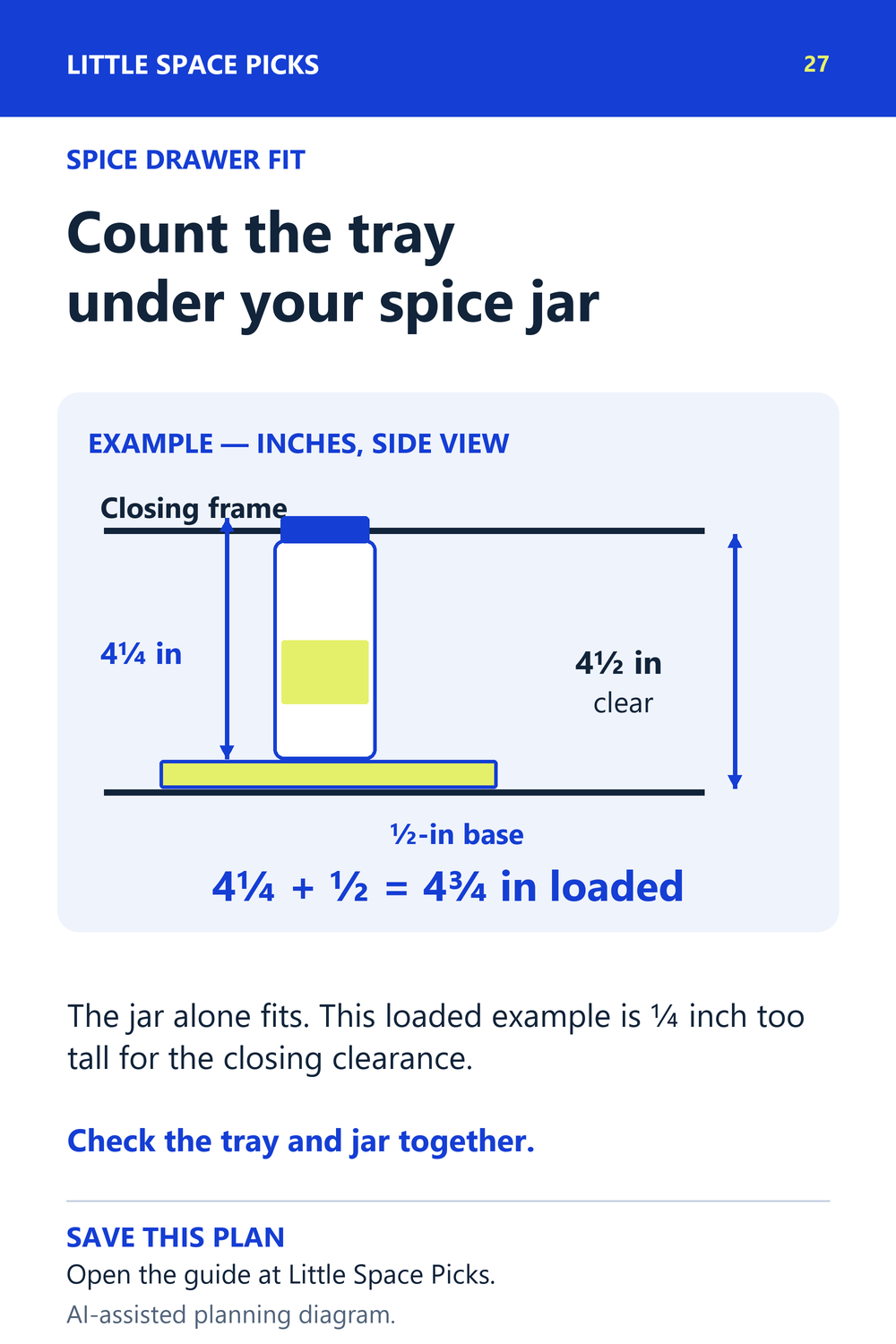
An original Little Space Picks planning diagram. Download the checklist.
Sources & further details
Sources checked October 5, 2026. Model details and installation guidance can change.